The Convergence Curve: 4 Critical Insights from the Alpha-7 Global Risk Report
The Hook: Navigating a World in ‘Pang State’
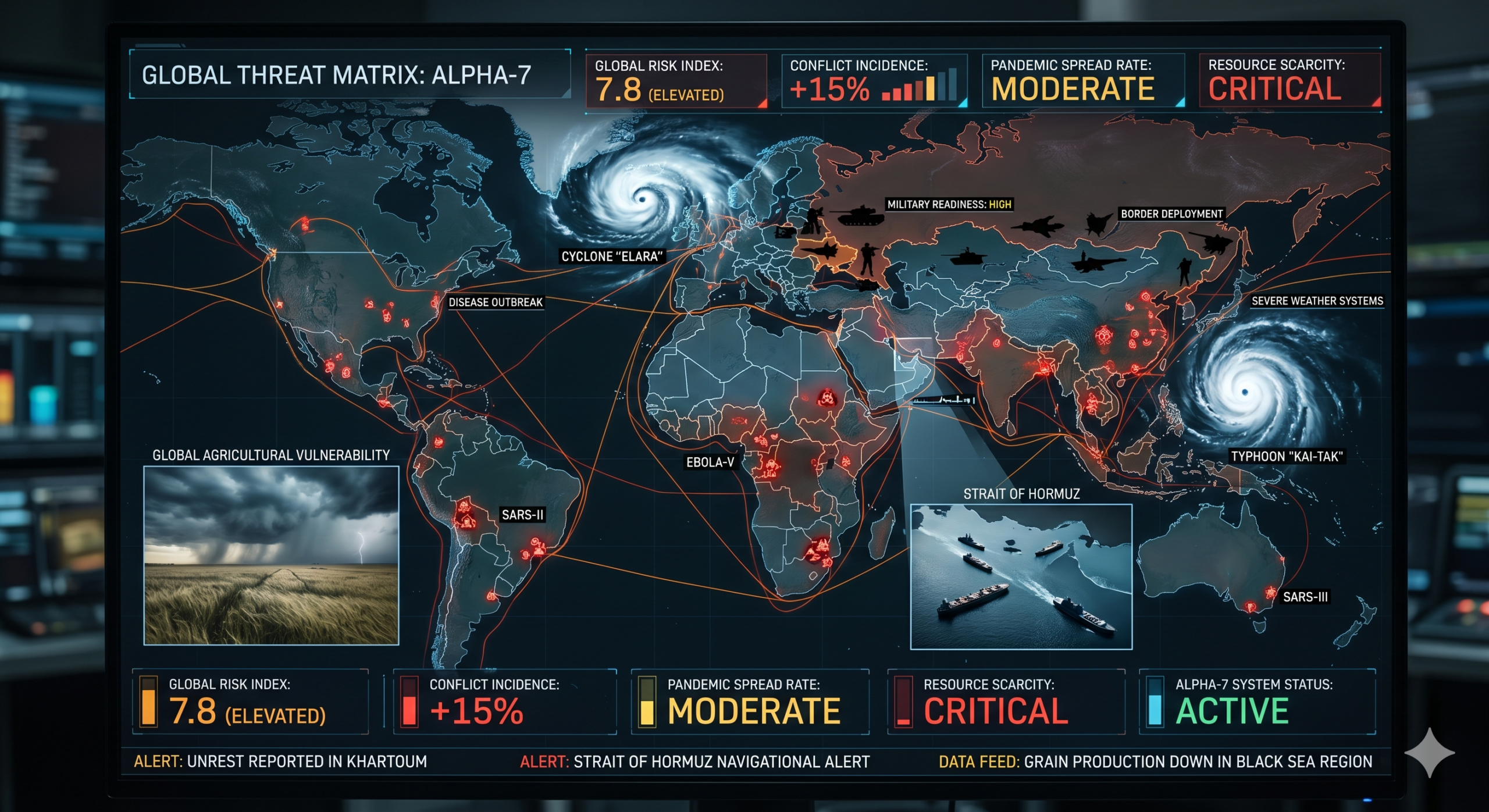
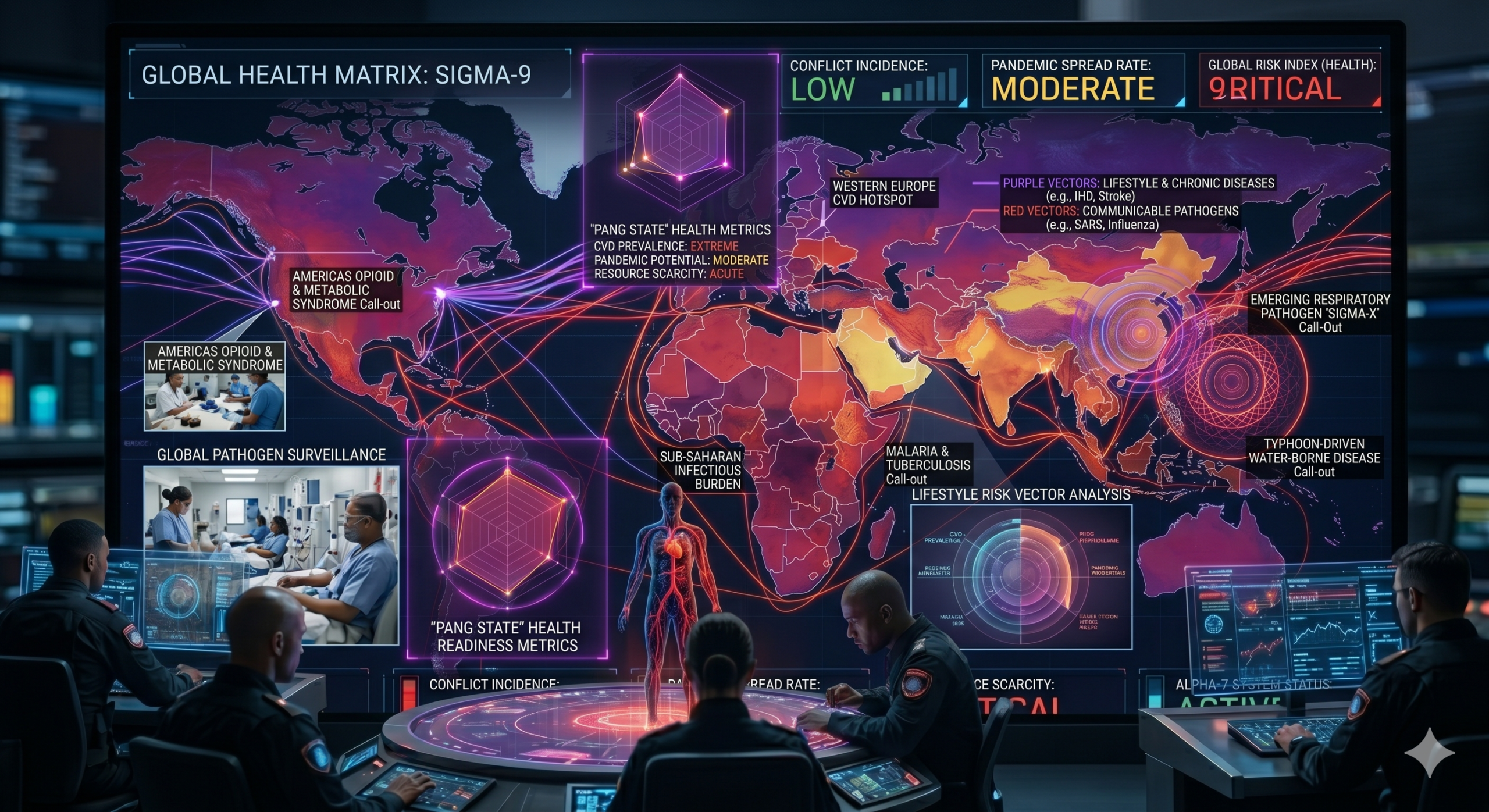
The latest Alpha-7 Global Risk Assessment reveals a world in a state of high-altitude stagnation. The Master Index currently sits at 60 (Elevated) , a slight de-escalation from the 62 recorded on May 10th. However, this downward tick is deceptive. We are witnessing the emergence of the “Pang State”—a diagnostic threshold where specialized risks begin to bleed across traditional boundaries, creating “Active Convergence.”As a strategist, I look for the “Convergence Delta”: the gap between what we monitor and what is actually accelerating. How does a freeze watch in the Appalachians link to a hantavirus outbreak on a cruise ship? These are not isolated incidents; they are signals of a world facing “dual-vector stress.” While the overall index has dipped, the intensity of specific drivers suggests we are merely monitoring a situation that is consolidating its energy for the next systemic shock.
Takeaway 1: The Cruise Ship Hantavirus and the Return of Critical Disease Risk
The most volatile metric in this reporting cycle is Disease Activity , which has surged to a “Critical” rating of 80.0 . This spike is driven by a hantavirus outbreak originating on a cruise ship—a high-density maritime hub that serves as a perfect vector for global transmission.The response has been swift and resource-intensive. Passengers have already reached isolation facilities in the UK, while the CDC has initiated high-stakes extraction protocols. This isn’t just a health alert; it is a logistical stress test for global transit.”CDC Flying 17 Americans From Hantavirus-Struck Ship Home” — Newser, May 10, 2026The maritime sector is the backbone of global trade. When a “Critical” disease event hits a primary hub, the “impact” rating scales exponentially. The speed of this transition from a localized shipboard event to a multi-national isolation effort highlights the extreme fragility of our current travel infrastructure.
Takeaway 2: The Hormuz Standoff vs. the “Ending” of Conflict
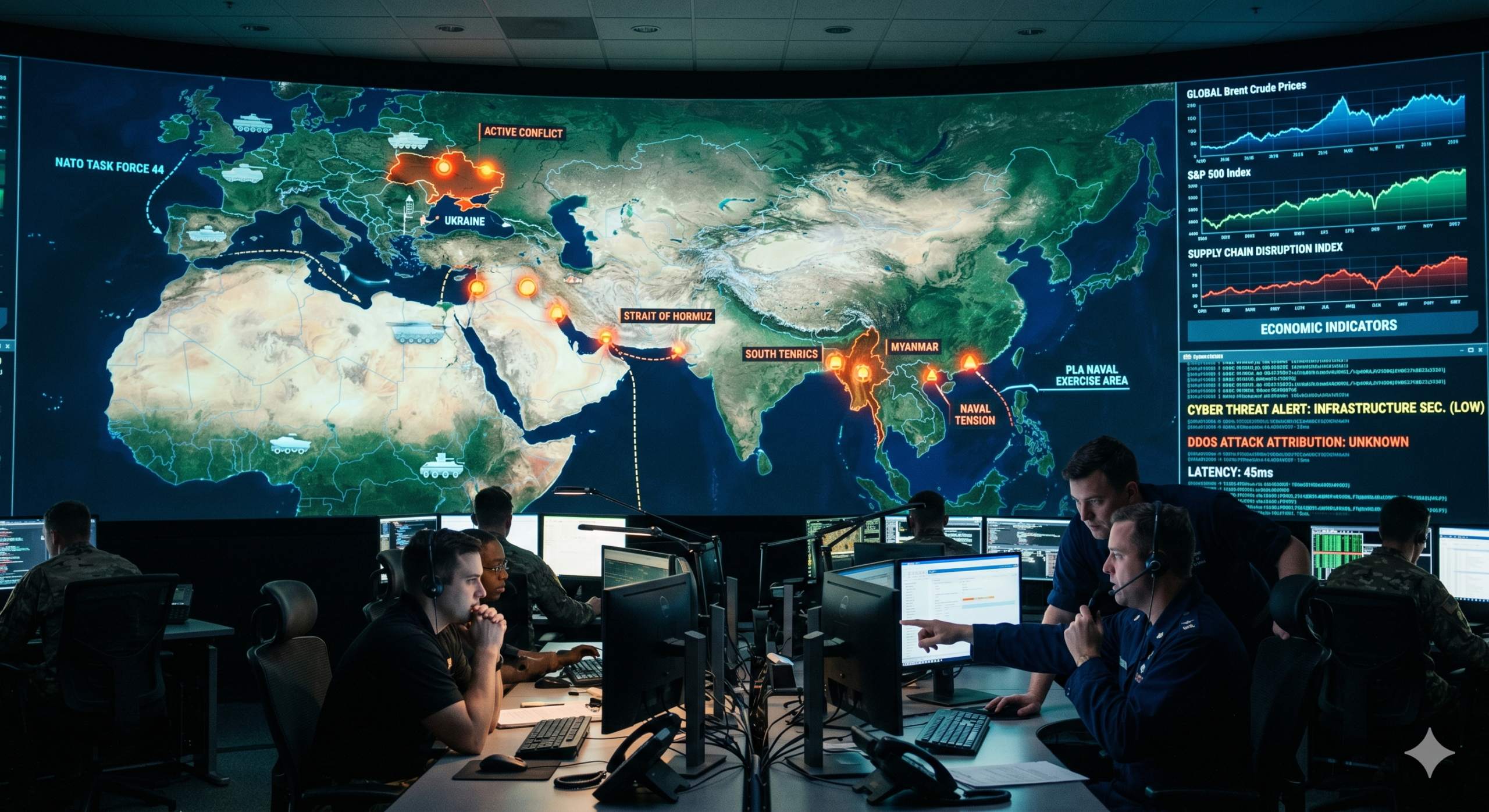
We are observing a significant cognitive dissonance in geopolitical rhetoric. Vladimir Putin has publicly suggested the Ukraine conflict is “coming to an end,” yet the tactical data suggests a widening “tanker war” in the Strait of Hormuz.While the War & Conflict index sits at a calm 50.0 (Monitoring) , the “Rumors of War” primary driver is at 70.0 . This asymmetry is telling. The potential for escalation is currently outstripping the kinetic reality on the ground. The US has already disabled two Iranian tankers, and a defense ministers’ meeting between the UK and France regarding Hormuz signals that international defense posture is hardening, regardless of diplomatic claims of a “fragile ceasefire.” We are seeing “reckless military adventures” replace traditional diplomacy, suggesting that while the conflict’s name may change, the risk to energy security is accelerating.
Takeaway 3: The “Atmospheric Compression” of the Global Food Supply
The intersection of Weather Severity (65.9) and Food Stress (65.5) has created a phenomenon I call “Atmospheric Compression.” This occurs when localized weather events act as direct economic inputs, squeezing the global supply chain until it hits the consumer.The FAO Food Price Index has hit 130.7 , a staggering increase from the 108.0 baseline. This economic pressure is the direct result of a compounding “Weather-Food” feedback loop. Consider the current NOAA data:
- 364 active US alerts are currently in effect.
- 60 of these are classified as Severe or Extreme.
- The range is total: Extreme Heat Warnings in San Diego contrasted with a Freeze Watch in the Appalachians.When 16% of weather alerts are severe, they actively “compress” agricultural output. This turns a regional freeze or heatwave into a global kitchen-table crisis, driving the FAO index upward and ensuring that food stress remains in the “Elevated” category.
Takeaway 4: The Silent Rise of “Pang States”
In the technical architecture of the Alpha-7 report, a “Pang State” occurs when a risk channel hits a score of 72.5 or higher . Currently, two channels have breached this level: Disease (80.0) and Ethnic Conflict (76.3) .It is vital to distinguish between these two. While Disease is driven by active headlines, the Ethnic Conflict score is a structural “Watchman” rating . Even though no specific civil unrest headlines were returned this cycle, the underlying systemic tension remains critical.This creates a state of “dual-vector stress.” For “Active Convergence” to be declared, three channels must hit the Pang State threshold simultaneously. We are currently one vector away from that trigger. With the Weather and Food channels already intersecting, we are watching a pre-convergence pattern where two major crises are beginning to amplify one another, even as the broader market remains quiet.
Conclusion: The View from Node:Alpha-7
The overarching theme of the current assessment is the disconnect between market perception and systemic reality. The CBOE VIX sits at 18.08 , which is actually below the historical baseline of 19.5 . Investors are signaling stability even as disease metrics hit “Critical” levels and agricultural output is compressed by extreme weather.We are seeing a world that is “simultaneously in Pang State,” where the groundwork for a broader systemic shock is being laid in the shadows of the “Monitoring” phase. This leads to a final, urgent diagnostic question: Is our global infrastructure prepared for the moment that third vector tips into the Pang State, or are we simply documenting the arrival of a crisis that has already outpaced our ability to respond?